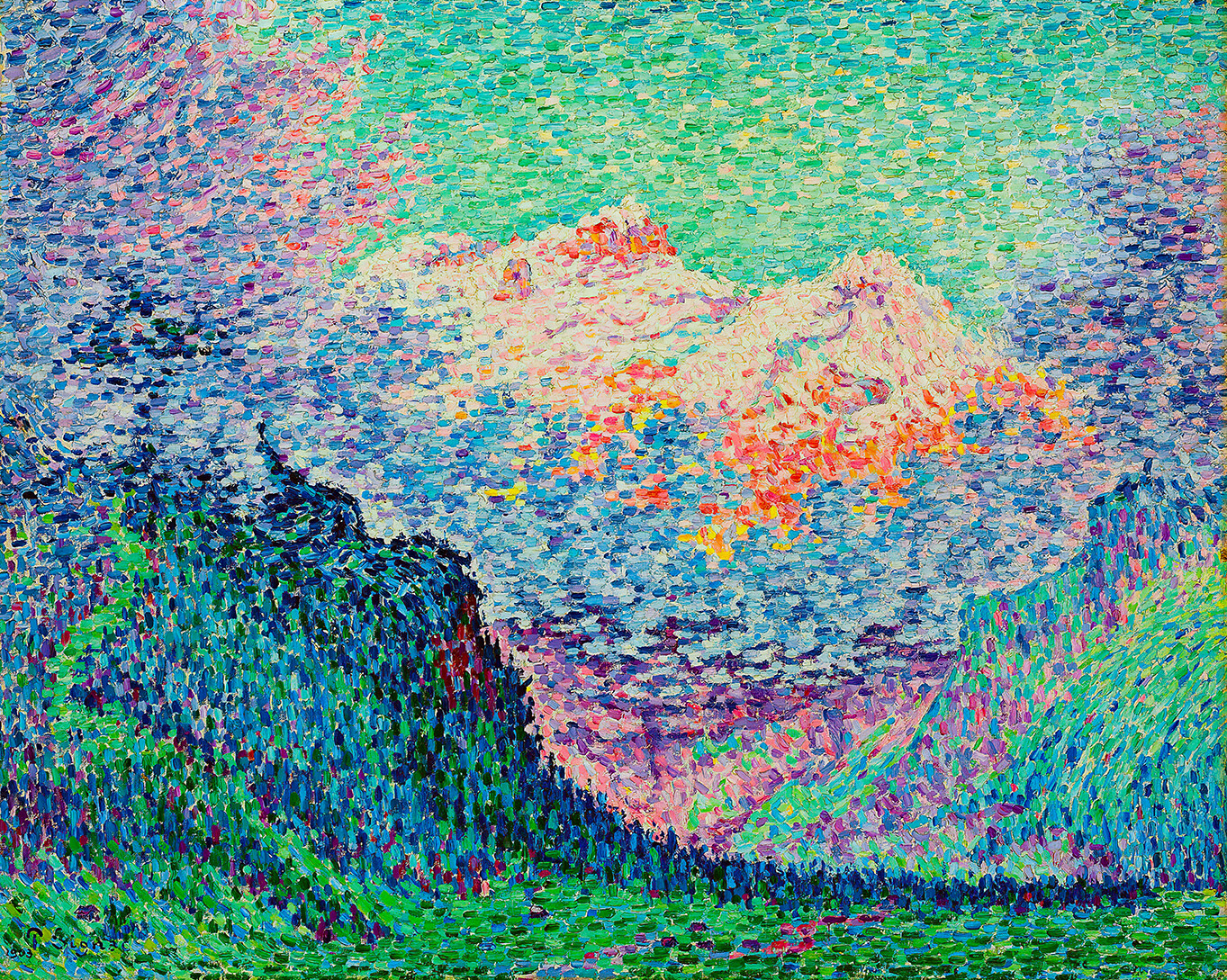
Work Description
Project Overview
港口城市水彩画:最自由、最轻盈的灵魂速写
Design Philosophy
I. Paul Signac: From Impressionism to the Scientific Transformation and Foundation of Color Signac was deeply influenced early in his career by Impressionist painters such as Monet. In 1884, he met Georges Seurat, and together they explored "divisionism"—the technique later known as Pointillism. After Seurat's untimely death, Signac became the leader and chief theorist of Neo-Impressionism, authoring *From Delacroix to Neo-Impressionism*, a systematic exposition of color optics principles. Sailing and Artistic Practice: An avid sailor, Signac owned multiple yachts and spent years sailing along the Mediterranean coast (including Saint-Tropez, Collioure, Marseille, Venice, and other locations). His intimate connection with the sea made harbors, sailboats, and seascapes his most beloved and mastered subjects throughout his life. II. Pointillist Painting (Neo-Impressionism): A Scientific Approach Blending Rationality and Emotion Pointillism was not merely about applying dots with a brush; it was a scientific method grounded in contemporary optical color theory: - **Optical Mixing**: Instead of mixing pigments on the palette, artists placed small dots of pure colors (e.g., pure red, pure blue) side by side on the canvas. When viewed from a distance, these dots naturally "blend" on the viewer’s retina, creating brighter, more luminous tones. **Differences Between Seurat and Signac**: Seurat used extremely fine, uniform dots, producing compositions that felt static, rigorous, and solemn—like marble sculptures (masterpiece: *A Sunday Afternoon on the Island of La Grande Jatte*). In contrast, Signac employed larger, more visible dots arranged with rhythmic precision. He favored mosaic-like patterns, resulting in brighter, more vibrant hues. His works radiate sunlight-filled brilliance and the dynamic energy of maritime life (masterpieces: *The Port of Saint-Tropez*, *Harmonies in Summer*). III. Watercolor Depictions of Harbor Cities: The Freest, Lightest Soul Sketches Watercolor represents another pinnacle in Signac’s artistic universe, equal in stature to his oil paintings. He created numerous watercolor landscapes, especially harbor city sketches directly from nature: - **Technical Characteristics**: His watercolors are remarkably concise, swift, and transparent. Typically, he first outlined buildings, boats, and coastlines with pencil or ink, then applied extremely diluted washes to render skies and seas. He extensively used "negative space" to suggest shimmering water surfaces. - **Emotional Expression**: While his Pointillist oils were "scientific long-term experiments," his watercolors captured "poetic moments." The fluidity of watercolor perfectly mirrored sea breezes, waves, and ever-changing skylights. In his depictions of Venice and Saint-Tropez, colors remain light and misty, often conveying the radiant sunshine and pleasant climate of the Mediterranean with just a few strokes. **Interrelationship**: These watercolor sketches served as Signac’s "diary" for capturing outdoor light and color. Precise records of light-shadow relationships were frequently brought back to the studio as references for large-scale Pointillist oil paintings. Artistic Value and Influence Signac’s greatness lies in combining a scientist’s rigor (in color theory) with a poet’s passion (for the sea and sailing). His watercolors exhibit relaxation and vitality, revealing his emotional side, while his Pointillist oils dazzle with vivid hues, foreshadowing later Fauvist pursuits of pure color (e.g., Matisse). If you are interested in such works, focus on his *Port of Saint-Tropez* series of watercolors—they encapsulate the most enchanting "symphony of light and water" in his oeuvre.
French Coastal Cities Watercolor Series
AS-C4A7B9ED · 2026
法国新印象派(点彩派)的奠基人之一,与乔治·修拉并称为该画派的双璧。他不仅是杰出的画家,更是新印象派坚定的理论家、航海家。
License
Personal Learning Edition
Free
Business Standard
¥0
Exclusive One-of-a-Kind Edition
¥0
Login to a third-party platform to complete your purchase.